
India’s Digital Personal Data Protection (DPDP) Act, 2023, represents a landmark shift in the regulatory landscape, mandating stringent IT controls and transforming data governance practices for enterprises across the country. Enacted with the aim of safeguarding individuals’ digital personal data, establishing a framework for trustworthy data processing, and enhancing privacy protection, this Act compels organizations to revisit their cybersecurity, compliance, and audit frameworks urgently to mitigate risk and achieve regulatory compliance.
The Urgency Behind DPDP Act Compliance
The DPDP Act was introduced amid rapid digital adoption and growing cyber risk concerns in India’s business ecosystem. Its arrival creates new imperatives for Indian enterprises to strengthen IT governance, elevate accountability in handling personal data, and embed privacy by design in their systems. Businesses—especially those processing data digitally or offering goods/services to Indian residents—must enhance their internal audit, IT General Controls (ITGC), cybersecurity measures, and governance protocols. Ignoring these mandates risks heavy penalties, reputational damage, and operational disruptions.
Understanding the DPDP Act: Scope and Core Mandates
What is the DPDP Act?
The Digital Personal Data Protection Act, 2023 governs the processing of digital personal data within India, or data processed outside India if linked to services offered in India. It applies specifically to digital personal data—any data identifying an individual in digital form including collection, storage, usage, and sharing.
Key Stakeholders Defined
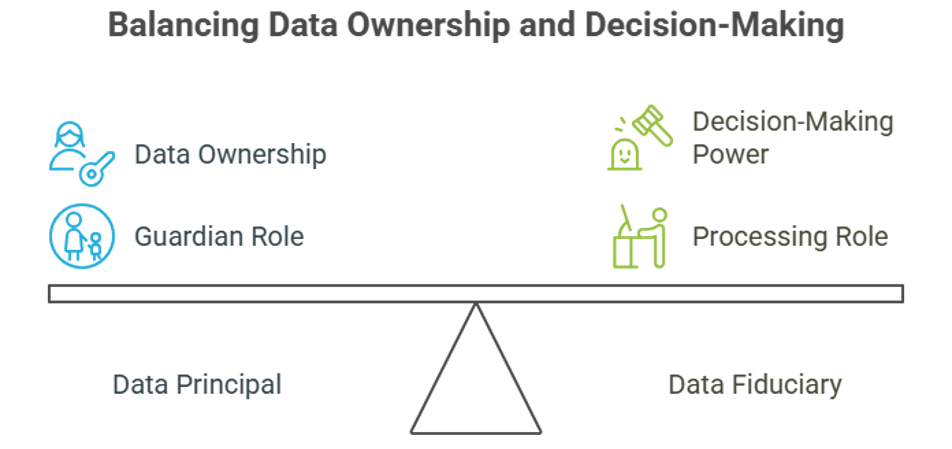
Data Fiduciaries: Entities (companies, government bodies) deciding how and why personal data is processed.
Data Principals: Individuals to whom the personal data relates.
Data Protection Board of India (DPB): A regulatory authority tasked with enforcement, compliance monitoring, and grievance redressal.
Critical Obligations on Data Fiduciaries
– Organizations acting as data fiduciaries must:
– Obtain free, specific, informed, unconditional, and unambiguous consent from data principals.
– Ensure accuracy, completeness, and security safeguards to protect personal data.
– Implement privacy by design and conduct necessary technical and organizational safeguards.
– Report data breaches promptly to the DPB and affected principals.
– Delete or anonymize personal data once the purpose is fulfilled unless law mandates retention.
– Appoint a Data Protection Officer and establish grievance redress mechanisms.
Impact on IT Controls and Data Governance
Revisiting IT General Controls (ITGC)
Under DPDP, ITGC frameworks must be recalibrated to ensure:
– Access controls to prevent unauthorized data access.
– Change management processes that include privacy impact review.
– Data integrity and confidentiality measures through encryption and monitoring.
– Incident management and breach response protocols aligned with DPDP reporting requirements.
– Periodic security audits and penetration testing to identify vulnerabilities.
Embedding Data Governance as a Strategic Priority
Organizations should establish or enhance data governance practices aligned with DPDP, including:
– Data classification and inventory: Identify digital personal data and categorize by sensitivity.
– Data lifecycle management: Processes for collection, storage, usage, sharing, and deletion respecting legal obligations.
– Consent management systems: Track and manage consents, withdrawals, and preferences efficiently.
– Cross-border data transfer compliance: Evaluate jurisdictions and apply restrictions notified by Indian authorities.
– Regular risk assessments to evaluate data processing activities and implement mitigating controls.
Contact us today to schedule your assessment and ensure your business is prepared to comply with India’s evolving data protection landscape.
Practical Strategies for DPDP Compliance and Audit Readiness
Compliance Framework Checklist
|
Compliance Area |
Key Actions |
|
Consent Management |
Implement consent capture and audit trails |
|
Data Accuracy & Minimization |
Validate data inputs and limit to necessary scope |
|
Security Safeguards |
Encrypt sensitive data, secure access controls |
|
Breach Notification |
Document breach response plan, notify DPB as mandated |
|
Retention & Erasure |
Define retention schedules and timely data deletion |
|
Governance & Accountability |
Appoint Data Protection Officer, conduct training |
|
Vendor Management |
Ensure third-party compliance through due diligence |
Role of Internal Audit and Risk Advisory
– Internal auditors must incorporate DPDP compliance into their audit universe by:
– Assessing adequacy of ITGC and technical controls relative to DPDP mandates.
– Testing operational effectiveness of privacy controls and data governance frameworks.
– Evaluating incident response and breach management readiness.
– Reviewing contracts and data sharing agreements for compliance provisions.
– Advising on remediations and continuous monitoring mechanisms.
– Leveraging AI and data analytics to identify privacy anomalies and automate compliance checks.
Industry Examples: DPDP Compliance in Action
Example 1: Consider a technology services company handling diverse client data. To comply with DPDP:
– It deployed a centralized consent management platform capturing explicit user consent with audit trails.
– Enhanced encryption protocols and deployed multi-factor authentication to secure data access.
– Instituted quarterly ITGC audits focused on privacy and data protection controls.
– Initiated privacy impact assessments to understand risks associated with new product launches.
– Trained business leaders and legal teams on DPDP obligations to ensure enterprise-wide compliance.
Example 2: A financial services firm revisited its data retention policies ensuring automatic deletion of personal data post the purpose fulfillment period mandated by the DPDP Act, aligned with tax and regulatory requirements. This effort was supported by revamped IT controls covering data archival and secure disposal.
The Road Ahead: Transformation Beyond Compliance
While the DPDP Act introduces clear statutory compliance requirements, it also presents an opportunity for Indian enterprises to build trust, drive operational excellence, and create data governance cultures centered on privacy. Implementing the DPDP Act with rigor:
– Enhances cybersecurity posture by integrating stringent IT controls.
– Aligns with global privacy norms, facilitating smoother cross-border data flows.
– Engenders business resilience through robust audit and risk management programs.
– Supports ESG efforts by committing to responsible data stewardship.
Request a DPDP Compliance Readiness Assessment
Given the complexity and urgency of the DPDP Act mandates, organizations must act swiftly to evaluate their current controls and transform data governance frameworks. Our Chartered Accountancy and Risk Advisory firm offers comprehensive DPDP Compliance Readiness Assessments, focusing on ITGC, internal audit, cybersecurity, and governance review to help you navigate these new compliance waters confidently.