
In the digital age, Chartered Accountant (CA) firms are entrusted with some of the most sensitive financial and personal data. From tax records to business financials, this information is a goldmine for cybercriminals. The stakes are incredibly high: a single data breach can lead to devastating financial losses, irreparable reputational damage, and severe regulatory penalties. For CA firms, cybersecurity isn’t just an IT concern; it’s a fundamental aspect of client trust and business continuity.
This guide provides a practical overview of how CA firms can bolster their defenses, ensuring robust data protection for their clients’ invaluable information. It’s time to move beyond basic security and implement a comprehensive strategy.
TL;DR – Quick Takeaways
-
CA firms are prime cyber targets due to highly sensitive financial & tax data
-
One breach = financial loss, legal penalties & reputation damage
-
MFA, encryption, backups & secure access are non-negotiable controls
-
Employee awareness is the strongest first line of defense
-
A tested incident response plan ensures business continuity
In the digital age, Chartered Accountant (CA) firms are entrusted with some of the most sensitive financial and personal data. From tax records to business financials, this information is a goldmine for cybercriminals. The stakes are incredibly high: a single data breach can lead to devastating financial losses, irreparable reputational damage, and severe regulatory penalties. For CA firms, cybersecurity isn’t just an IT concern; it’s a fundamental aspect of client trust and business continuity.
This guide provides a practical overview of how CA firms can bolster their defenses, ensuring robust data protection for their clients’ invaluable information. It’s time to move beyond basic security and implement a comprehensive strategy.
Why Data Protection is Non-Negotiable for CA Firms
CA firms operate under a strict code of ethics and fiduciary responsibility, making client data protection a paramount concern. Breaches not only compromise sensitive information but also erode the trust that is the bedrock of the client-accountant relationship. Beyond ethical duties, there are significant legal and financial ramifications.
Regulatory bodies worldwide are imposing stricter data protection laws, such as GDPR, CCPA, and various local equivalents. Non-compliance can result in hefty fines that far outweigh the cost of proactive security measures. A data breach can also halt operations, leading to lost productivity and potential legal battles with affected clients.
Common Cyber Threats Targeting CA Practices
Cybercriminals are constantly evolving their tactics, and CA firms are increasingly attractive targets due to the wealth of sensitive data they hold. Understanding these threats is the first step towards effective defense.
- Phishing and Social Engineering: Deceptive emails or messages designed to trick employees into revealing credentials or downloading malware. These attacks often impersonate legitimate entities like banks, tax authorities, or even senior firm members.
- Ransomware: A type of malware that encrypts files and demands a ransom, usually in cryptocurrency, for their release. For CA firms, this can mean losing access to all client data and operational systems.
- Malware and Spyware: Malicious software designed to gain unauthorized access, steal data, or disrupt operations. This can range from keyloggers recording keystrokes to trojans opening backdoors into your network.
- Insider Threats: These can be malicious employees intentionally stealing data or, more commonly, negligent staff members who inadvertently cause breaches through poor security practices or falling for phishing scams.
- Weak Passwords and Access Controls: Easily guessed passwords or a lack of multi-factor authentication (MFA) create significant vulnerabilities, allowing unauthorized access to critical systems and client information.
Building a Robust Data Protection Framework
Effective cybersecurity for CA firms requires a multi-layered approach, addressing technology, processes, and people. Start by conducting a thorough risk assessment to identify your most critical assets and potential vulnerabilities.
- Data Encryption: Ensure all sensitive client data is encrypted, both when “at rest” (stored on servers, hard drives, or cloud storage) and “in transit” (when being sent via email or across networks).
- Strong Access Controls: Implement the principle of least privilege, meaning employees only have access to the data and systems absolutely necessary for their job roles. Regularly review and update these permissions.
- Regular Backups: Maintain secure, offline, and immutable backups of all critical data. Test these backups regularly to ensure they can be successfully restored in the event of a data loss incident.
- Secure Network Infrastructure: Utilize robust firewalls, intrusion detection systems, and Virtual Private Networks (VPNs) for secure remote access. Segment your network to limit the spread of an attack.
- Secure Cloud Services: If using cloud solutions, ensure they comply with industry-standard security certifications and have strong data protection policies. Understand where your data is stored and who has access.
Practical Steps to Fortify Your Defenses
Beyond the foundational framework, there are specific actions CA firms can take to significantly enhance their cybersecurity posture.
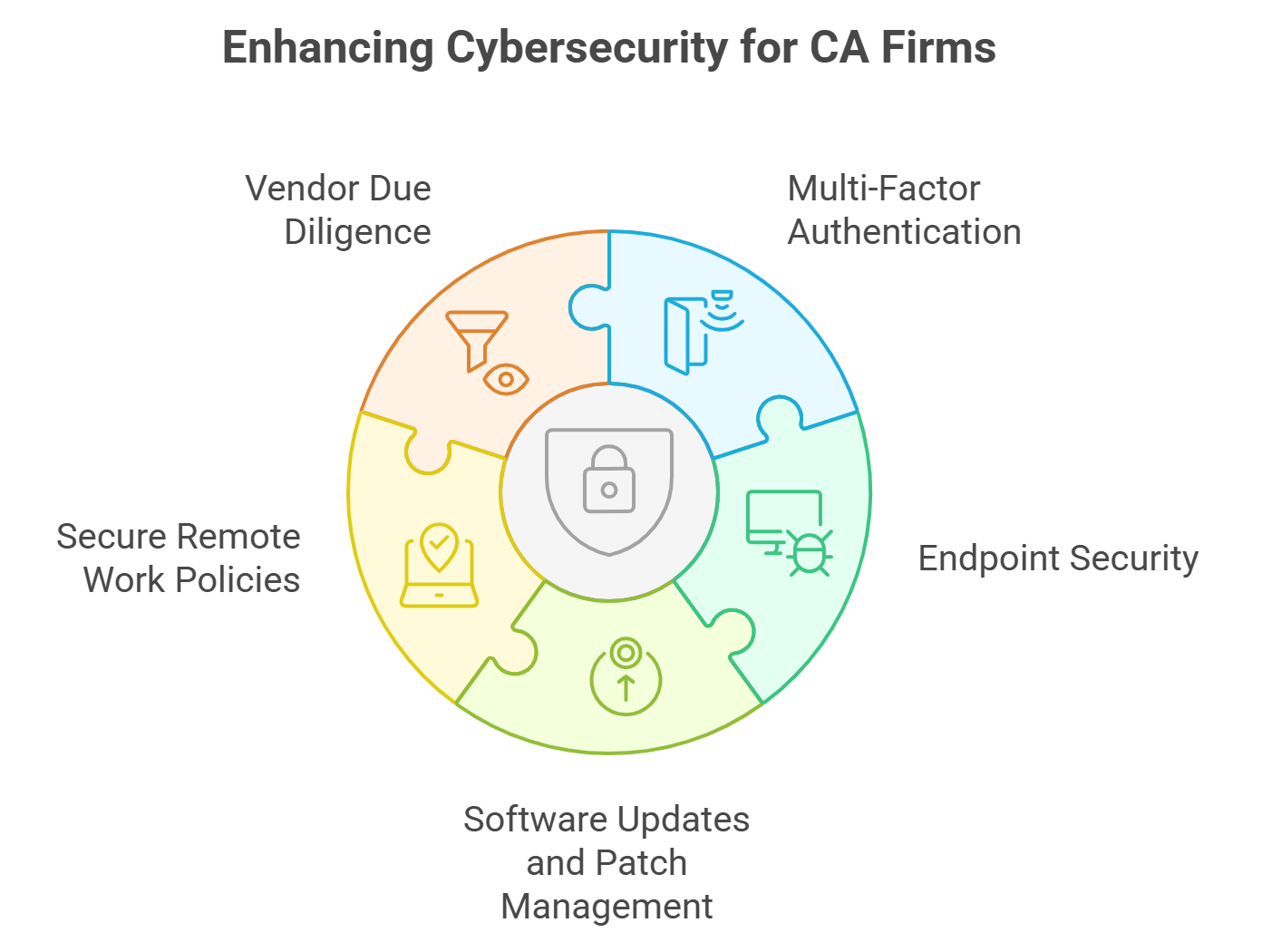
- Implement Multi-Factor Authentication (MFA): This is perhaps the single most effective security measure. Require MFA for all accounts, especially those accessing sensitive client data, email, and network resources.
- Endpoint Security: Install and maintain up-to-date antivirus and anti-malware software on all computers, laptops, and mobile devices used for firm business.
- Software Updates and Patch Management: Regularly update all operating systems, applications, and firmware. Cybercriminals often exploit known vulnerabilities in outdated software.
- Secure Remote Work Policies: With the rise of remote work, ensure employees use secure, firm-approved devices, robust VPNs, and understand secure Wi-Fi practices.
- Vendor Due Diligence: Thoroughly vet all third-party vendors and service providers (e.g., cloud software, payroll providers) to ensure they meet your security standards.
Training and Awareness: Your First Line of Defense
Technology alone cannot fully protect your firm; your employees are your most critical asset in the fight against cyber threats. Human error is a leading cause of data breaches. Empowering your team with knowledge and best practices is essential for robust cybersecurity for CA firms.
- Regular Cybersecurity Training: Conduct mandatory, ongoing training sessions for all staff on identifying phishing attempts, practicing good password hygiene, and understanding firm security policies.
- Phishing Simulations: Periodically run simulated phishing campaigns to test employee vigilance and reinforce training. Provide immediate feedback and additional training for those who fall for the simulations.
- Strong Password Policies: Enforce the use of complex, unique passwords (or better yet, passphrases) and encourage the use of password managers.
- Incident Reporting: Establish clear procedures for reporting suspicious emails, unauthorized access attempts, or any potential security incidents. Emphasize that reporting is crucial, not punitive.
Developing an Incident Response Plan
No matter how robust your defenses, a cyber incident is always a possibility. A well-defined incident response plan is critical for minimizing damage and ensuring business continuity.
Your plan should outline clear steps for identifying, containing, eradicating, and recovering from a breach. This includes who to notify (clients, regulators, law enforcement), how to communicate during a crisis, and what steps to take for forensic analysis and remediation. Regular testing and updating of this plan are vital to its effectiveness.
Protect Your Firm, Protect Your Clients
For Chartered Accountants, safeguarding client data is more than a regulatory requirement; it’s a professional imperative. By implementing strong cybersecurity measures, investing in employee training, and preparing for potential incidents, your firm can build resilience against evolving cyber threats. Protecting client financials reinforces trust and secures your firm’s future.
Primary CTA: Download our CA Cyber Checklist to ensure your firm is equipped with essential data protection strategies.